

As part of its mission to eradicate discrimination in the District of Columbia, the Office of Human Rights has launched numerous awareness campaigns aimed at preventing discrimination and encouraging people to report discrimination when it happens. Below are the most recent campaigns.
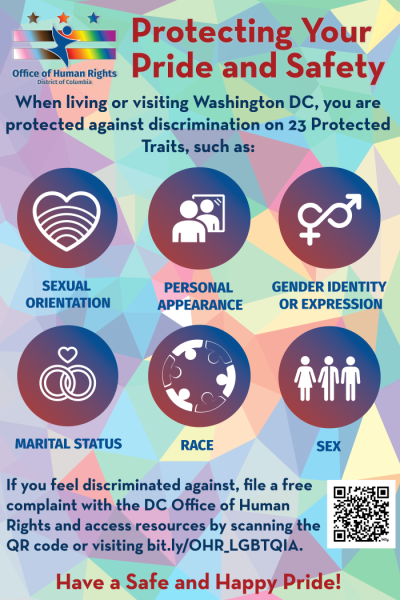
Protecting Your Pride and Safety:
Piloting at Black Pride in 2024, this program aims to allow simpler access to the LGBTQIA+ community in filing a complaint and learning about their rights. Posters are hung in LGBTQIA+ spaces, such as the Pride venue, cafes, nightlife venues and more, and have a QR code which individuals can scan to take them to this portal. We plan to expand this program for World Pride 2025 where an estimated 3 million attendees will have available access.
To learn more please email: [email protected],or visit OHR's LGBTQIA+ portal.
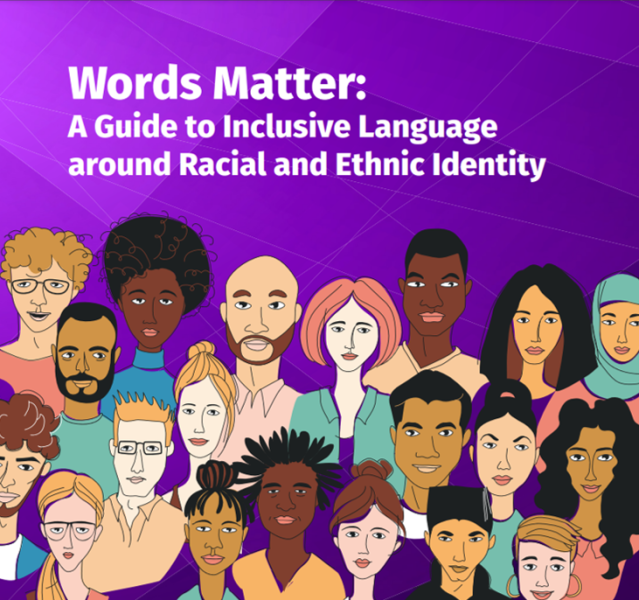
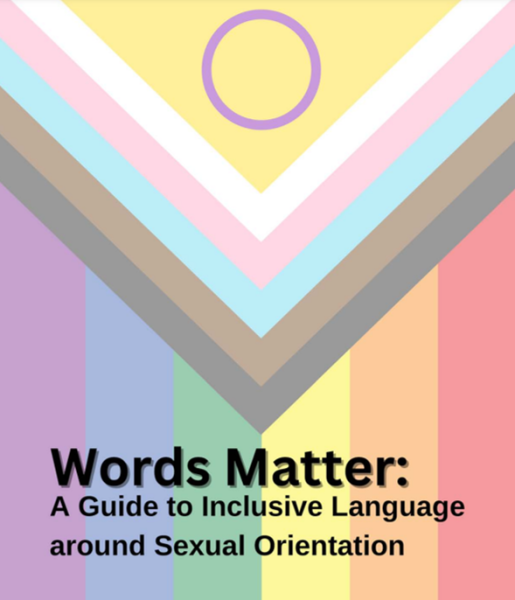
Words Matter: Inclusive Language Guides
Beginning in May 2023, OHR launched our first Inclusive Language Guide (ILG) on race and ethinic identitiy. These guides serve as educational resources for District employees and the public as they begin to engage more regularly in conversations about race, sexual orientation, gender identity and expression, and disability & ableism. As educational resources, they should not be construed as legal advice or as a mandate. Rather, they should be viewed as invitations to encourage the use of language that centers on inclusion and equity by being mindful of the voices and experiences of people who have been historically marginalized. These guides are not meant to be comprehensive and are considered to be living documents. Currently, OHR offers two ILGs with more along the way.
To learn more and download these guides, please visit our inclusion and equity resource page.
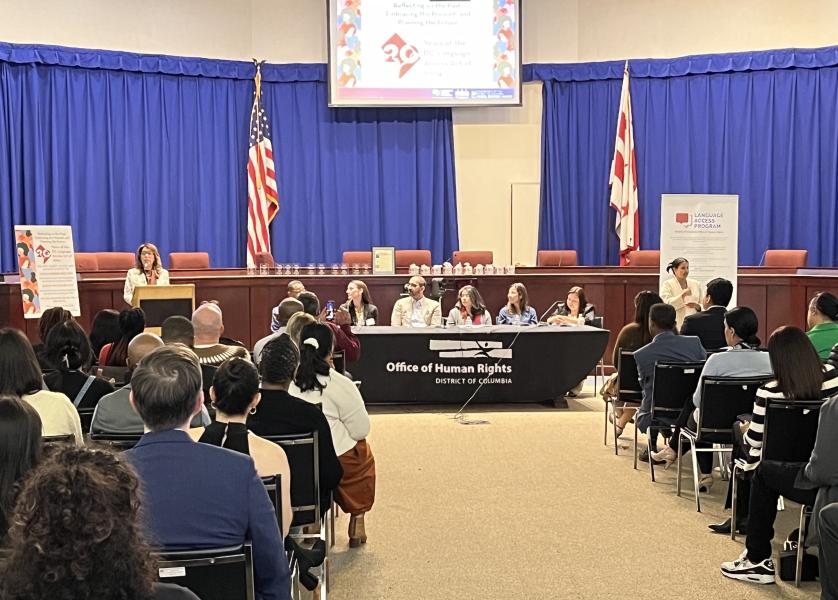
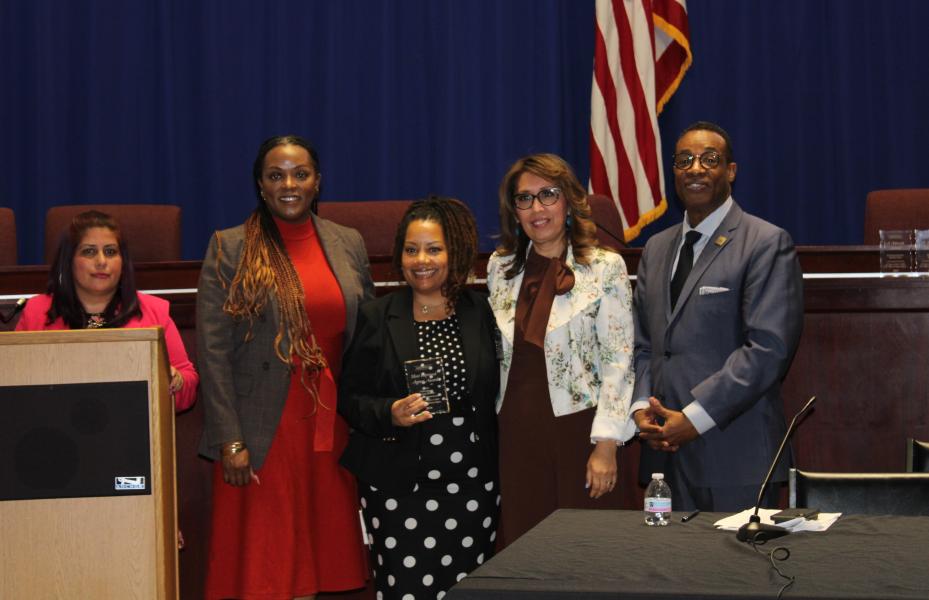
20th Anniversary of the DC Language Access Act
Fair Housing Portal
Launched in April 2024, for Fair Housing Month, The DC Office of Human Rights' Fair Housing Portal is an online platform designed to support residents in understanding and exercising their housing rights. It provides resources for filing discrimination complaints, accessing educational materials about fair housing laws, and connecting with support services. The portal aims to ensure equitable housing practices and protect individuals from discriminatory practices in the District of Columbia. To learn more, please click here.
Safe Bathrooms DC
The Safe Bathrooms DC campaign, launched in April 2014, aims to change the stressful and even dangerous experience of using public restrooms by making every single-stall public bathroom, which is a small room with a toilet and sink and a door that locks, such as those found at restaurants, in the District gender-neutral. It is the law.
Ten years later, many businesses and individuals are still unaware of this requirement. That is why OHR has revamped and updated the resources and information concerning this. If you see a single-stall public bathroom that is not gender neutral, just tweet us the business name and location using #safebathroomsdc or fill out our five question form.
To learn more and get resources, please click here.
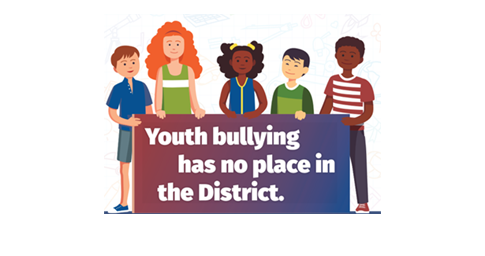
Youth Bully Prevention Posters
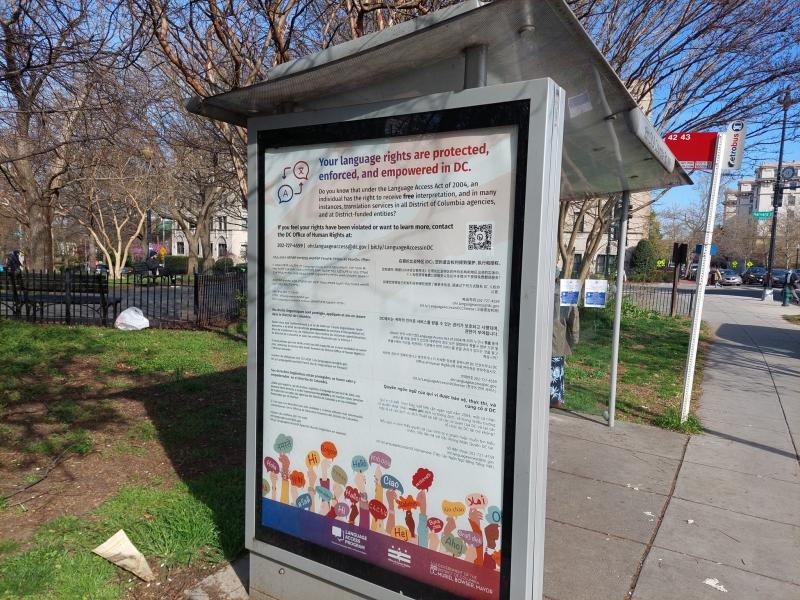
Language Access Month Bus Advertisements
In April 2023, OHR placed ads at 9 bus shelters and inside 300 buses. The bus shelters and bus lines were throughout the District, focused in areas heavily populated with Limited-English Proficient and Non-English Proficient (LEP/NEP) communities. The advertisement highlighted language access rights in DC and what to do if those rights have been violated. The messages on the ad were translated into the top six non-English languages spoken in DC. Each translated section took the viewer to the Language Access portal on the OHR website, in that respective language.
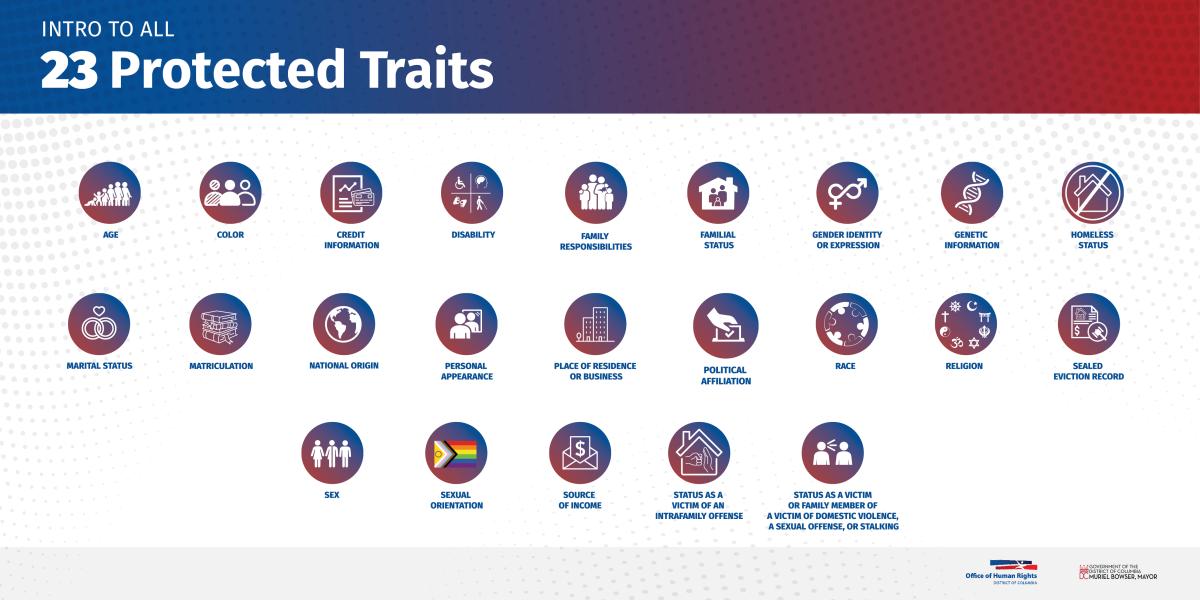
Protected Trait Tuesday
In FY23, OHR created a series of posts to our social media account that highlighted the 23 protected traits under the DC Human Rights Act. These posts were translated into the top six languages in DC, and included topics such as: which traits apply to which four areas of enforcement (educational institutions, employment, housing, and public accommodation and government services) and sharing the revised definitions of each trait.
TEDxMidAtlantic Salon - EVE: Everyone Values Equality
Watch talks from speakers at the TEDxMidAtlantic salon "EVE: Everyone Values Equality," presented by TEDxMidAtlantic in 2016 in partnership with OHR. The talks from speakers explored the realities women face in the United States today, and how to move toward a 21st century of equal opportunity regardless of gender and gender identity. Watch the talks now.
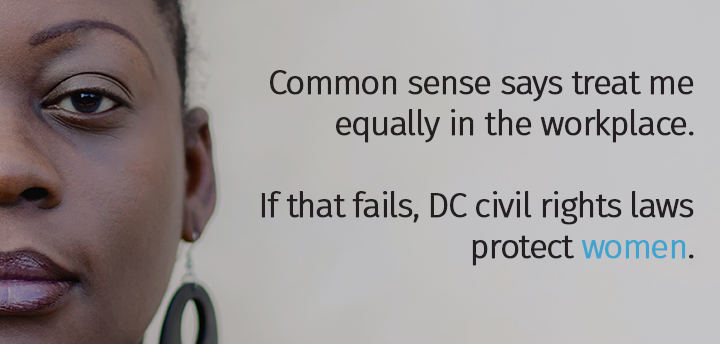
#WomenAreEqualDC
The #WomenAreEqualDC gender equality campaign, launched in October 2015, features seven women from diverse race and ethnicities, religions, sexual orientations and gender identities. The campaign aims to raise awareness on civil rights protections for women in the workplace, including women who are pregnant or breastfeeding. See the campaign ads.
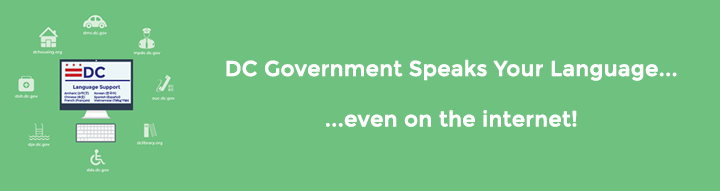
DC Websites Speak Your Language
In September 2014, OHR announced the completion of a yearlong initiative to provide critical service information in multiple languages on over 30 District government agency websites. Individuals who speak Amharic, Chinese, French, Korean, Spanish or Vietnamese are now able to access a description of core services using an in-language hyperlink featured near the bottom of each agency homepage. To promote awareness of the language-specific pages, OHR has placed advertisements in local ethnic media outlets and alerted community partners who serve limited and non-English proficient residents. See the campaign ads.
Know Your Rights "I Speak" Campaign: Summer 2012
The 2012 Know Your Rights campaign aims to educate limited and non-English proficient DC residents about interpretation services that must be made available to them at government agencies if they speak Amharic, Chinese, French, Korean, Spanish or Vietnamese. The seven public service announcements and six print advertisements released with the Know Your Rights campaign acknowledge the difficulty of being limited or non-English proficient, but that "I Speak" cards provided by the DC Office of Human Rights can make access to government services easier. View all the public service annoucements and download an "I Speak" card on the Know Your Rights campaign page.
Spanish |
Chinese (Mandarin) |
|---|---|
Additional Campaigns
Additional Questions and Customer Conduct
If you have any further questions please contact us via:
- E-mail: [email protected]
- In-Person: 441 4th Street NW, Suite 570N, Washington, DC 20001
- Phone: (202) 727-4559
When you call or visit us and require language assistance, our staff will connect you with a live interpreter to ensure we can assist you effectively.
Please note that while OHR is available to answer questions to the best of our ability, any information provided should not be considered legal advice.
OHR is committed to providing a safe, respectful, and productive environment for all. Harassing, threatening, or abusive behavior interferes with our ability to serve the public and will not be tolerated. You can learn more by reading OHR’s Customer Conduct Policy.
This webpage was last updated on April 14, 2026.